Why is “material choice” more important than “style”?
Many people are first attracted by the style of barn doors, but what truly determines the door’s lifespan, stability, and long-term cost is not the style—it’s the properties of the wood itself. The same design made of pine versus oak may show a huge difference after 10 years of maintenance. Choosing materials must consider: budget, climate/exposure level, frequency of use, door size and weight, desired style, and ease of maintenance.
6 Key Factors to Confirm Before Choosing Materials
- Budget range (low / medium / high) – Set the total budget first to filter out unsuitable woods.
- Door purpose (indoor sliding / exterior entry / high-frequency use / livestock or equipment access).
- Climate and exposure (humid/rainy / strong sun / very dry / insect-prone).
- Door size and weight limits (large doors should use lightweight or engineered cores).
- Desired aesthetic (natural wood tone / paintable / rustic knotty look).
- Maintenance willingness (whether you’re ready for regular refinishing and care).
Quick Comparison Table (for Easy Decision-Making)
| Wood / Type | Price (Relative) | Durability | Moisture & Pest Resistance | Weight (Relative) | Appearance / Style | Best Use Cases |
|---|---|---|---|---|---|---|
| Pine | Low | Medium | Medium | Light | Plain / Paint-friendly | Indoor, budget-friendly |
| Knotty Pine | Low–Medium | Medium | Medium | Light | Rustic / Country | Farmhouse interior, decorative doors |
| Oak | High | Very High | Excellent | Heavy | Premium, upscale look | High-end exterior & interior doors |
| Cedar | Medium | High | Naturally resistant | Light–Medium | Natural, aromatic | Humid climates, outdoor doors |
| Birch | Medium | Medium–High | Requires treatment | Medium | Light color, modern | Indoor, light-tone designs |
| Fir | Medium | High | Good | Medium | Rugged / Workable | Exterior, damp environments |
| Poplar | Low–Medium | Medium | Requires treatment | Medium | Stainable, versatile | Indoor, cost-effective hardwood choice |
| Walnut | Very High | Very High | Good | Medium–Heavy | Luxurious dark tone | Custom, high-end doors |
| Reclaimed Wood | Variable | Varies by source | Requires treatment | Varies | Vintage, unique character | Decorative, rustic, eco-conscious use |
| Engineered / Plywood + Veneer | Low–Medium | Medium–High | Depends on construction | Controlled | Any finish achievable | Large-size doors, lightweight needs |
In-Depth Guide: How to Choose and Use Each Wood Type
1> Pine & Knotty Pine
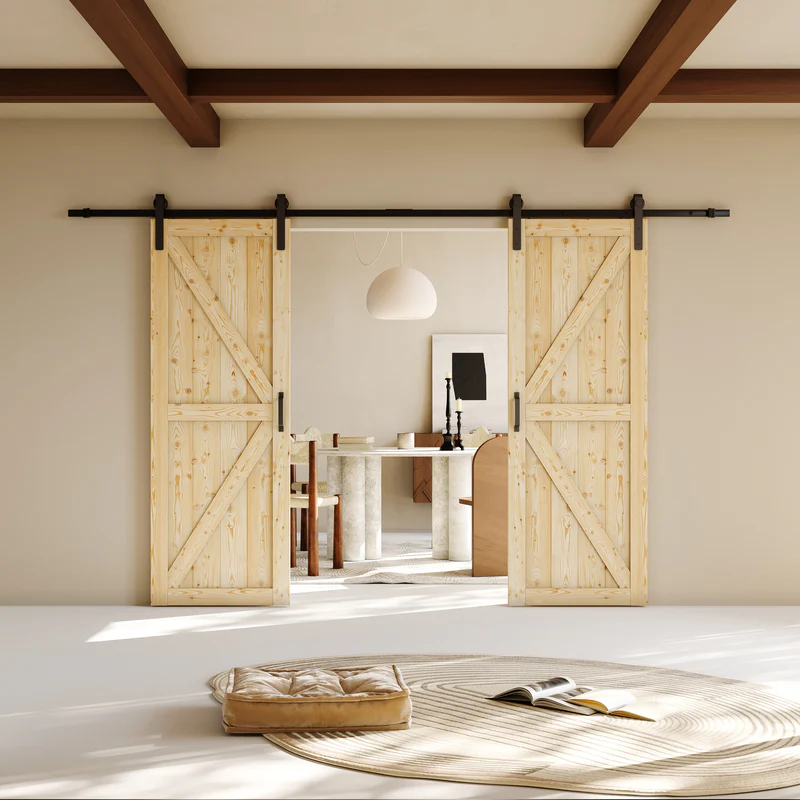
Best for: Budget-conscious projects, rustic/farmhouse style, or doors that will be painted.
Pros: Low cost, lightweight, easy to work with. Large doors put less stress on hinges and tracks.
Cons & Tips: Softwood dents easily and may warp in moisture. For outdoor use, apply preservative treatment and seal all ends (end grain absorbs water quickly). When cutting knots, use proper saw speed and sharp tools to reduce tear-out.
Processing Tips: Apply primer first, then two finish coats. For outdoor use, add waterproof topcoat or oil-based sealer
2> Oak
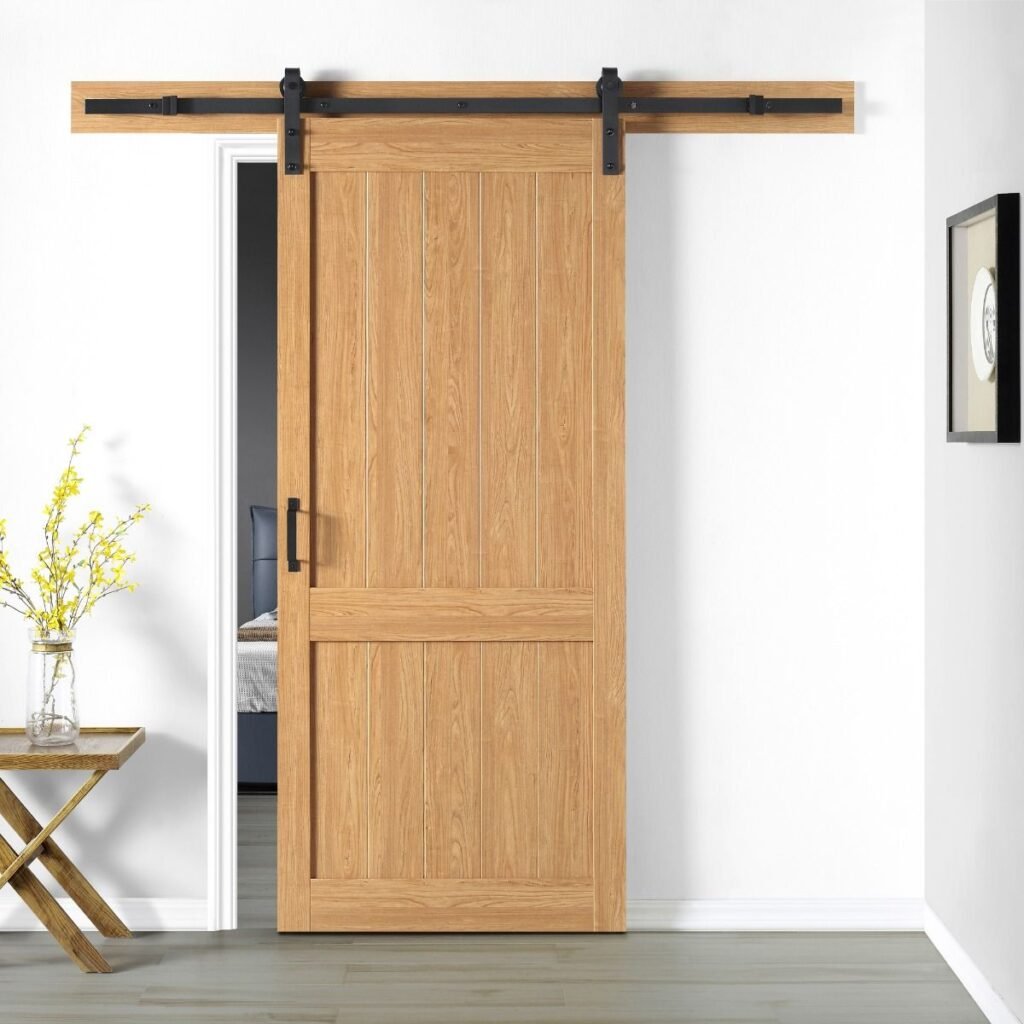
Best for: Customers who want durability and a premium look.
Pros: Very strong, wear-resistant, good natural pest resistance. Suitable for heavy use and exterior doors.
Cons & Tips: Heavy weight requires heavy-duty tracks and hinges. High cost. For exterior use, choose white oak and refinish every 2–5 years depending on sun/rain exposure. To reduce weight and cost, consider a solid wood frame with oak veneer.
3> Cedar (Western Red Cedar)
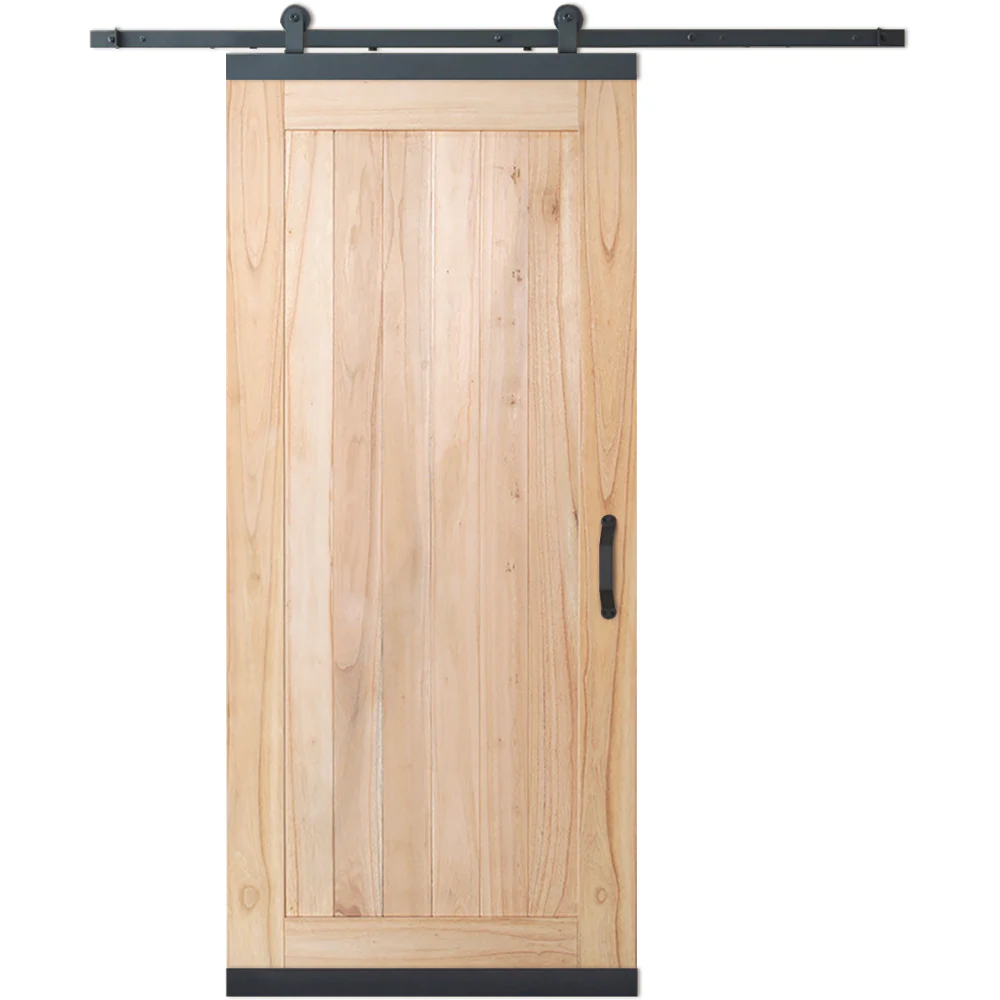
Best for: Exterior doors, humid climates, or customers who want natural insect resistance.
Pros: Naturally resists mold and insects, lightweight, has a pleasant aroma. Ages into a natural gray color (can leave as is or use clear coat to keep original tone).
Cons & Tips: Not as strong as oak, so reinforce structure. Seal both ends and back side to prevent stress warping from uneven coating.
4> Birch & Poplar
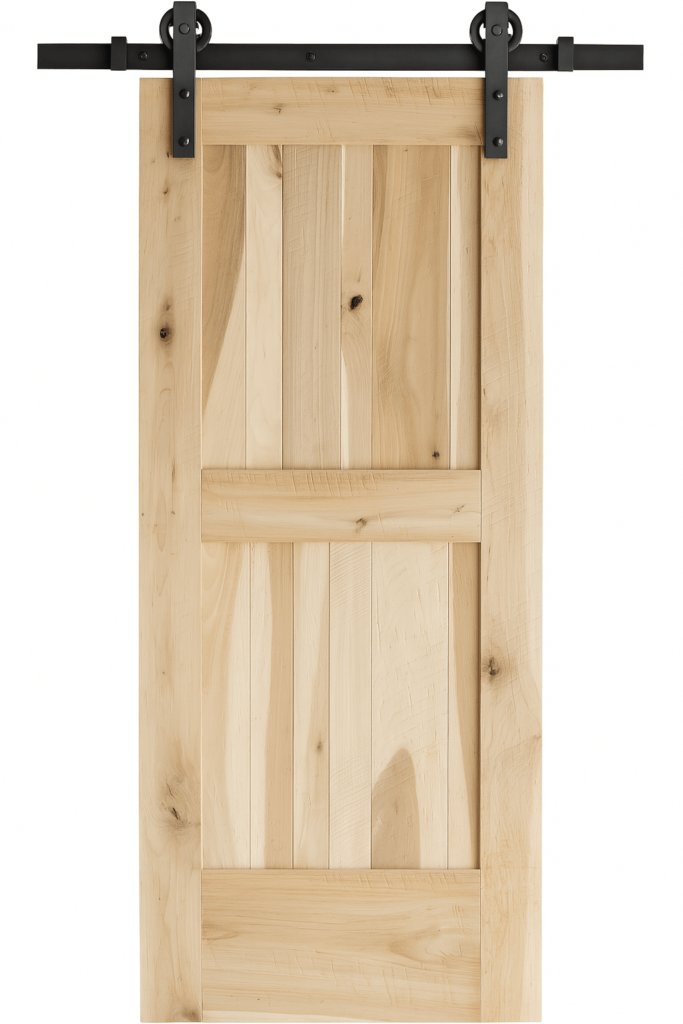
Best for: Indoor projects needing light color or custom stains, mid-range budget.
Pros: Smooth and uniform grain, easy to paint or stain, good value for money.
Cons & Tips: Birch can yellow under sunlight. Must be well protected if used outside. Poplar is prone to insect damage; exterior use requires insect treatment.
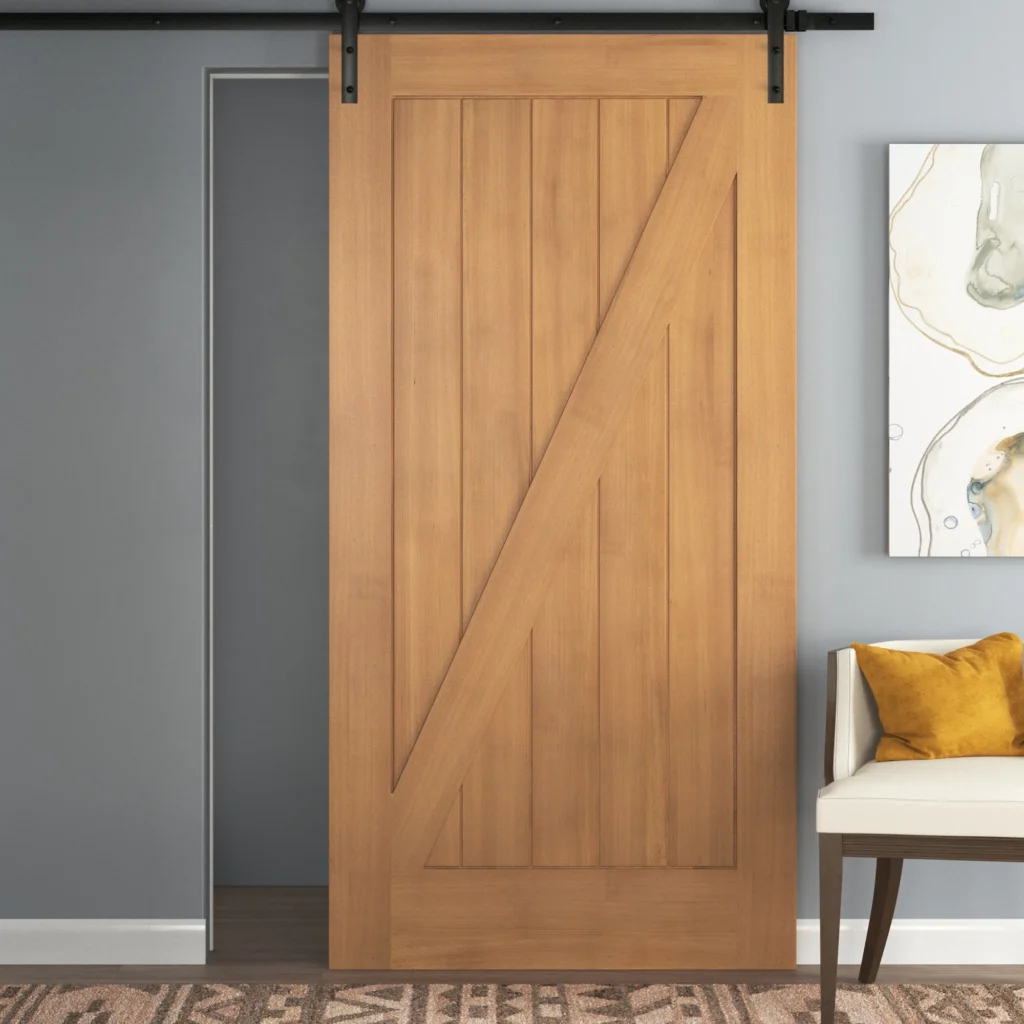
5> Fir
Source from Pinterest
Best for: Exterior doors in damp conditions, or mid-budget projects needing good strength.
Pros: Stable, low shrinkage, easy to machine. Often used in large doors and structural parts.
Cons & Tips: May have knots, fits rustic or industrial look. Apply sealant and waterproofing for outdoor use to extend lifespan.
6> Walnut & Other Premium Hardwoods
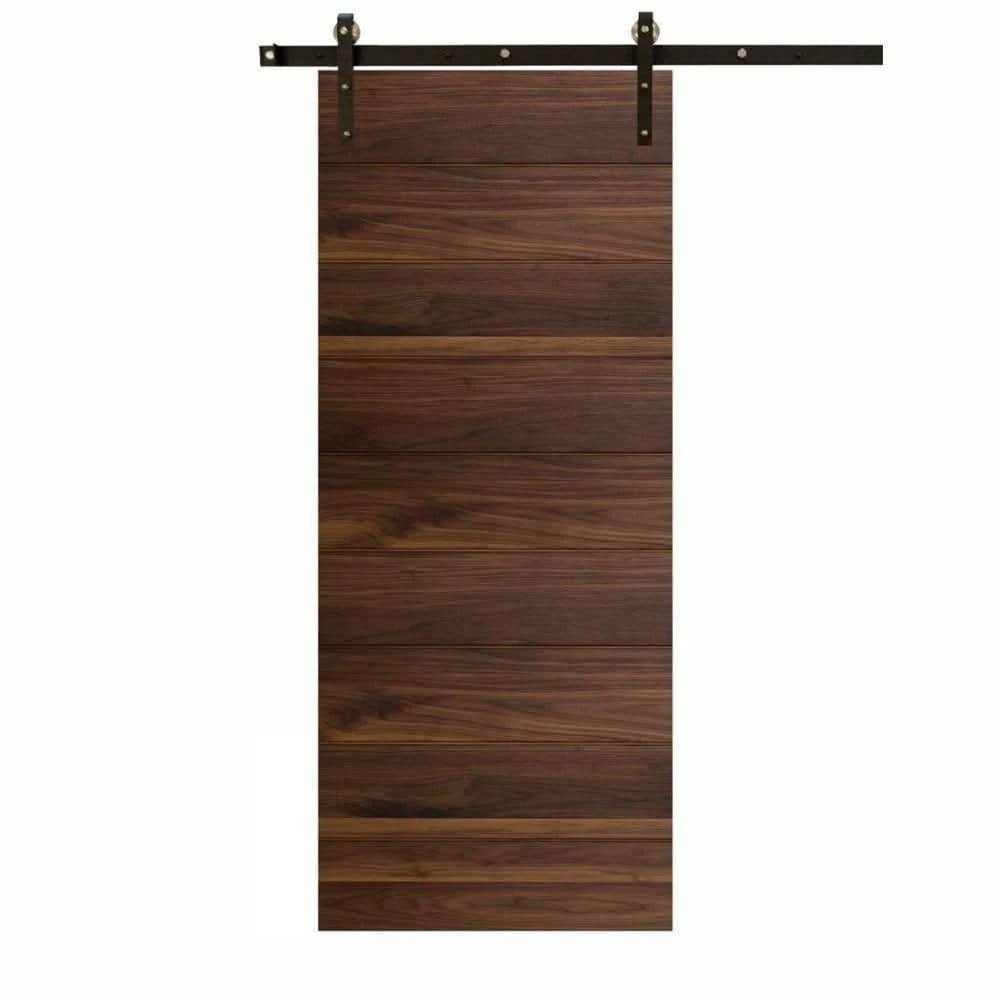
Pros: Excellent look and feel, very high-end, ideal for villas or showcase projects.
Cons & Tips: Very expensive, limited supply. Better for smaller doors or panel designs rather than full-size solid slabs.
7> Reclaimed Wood
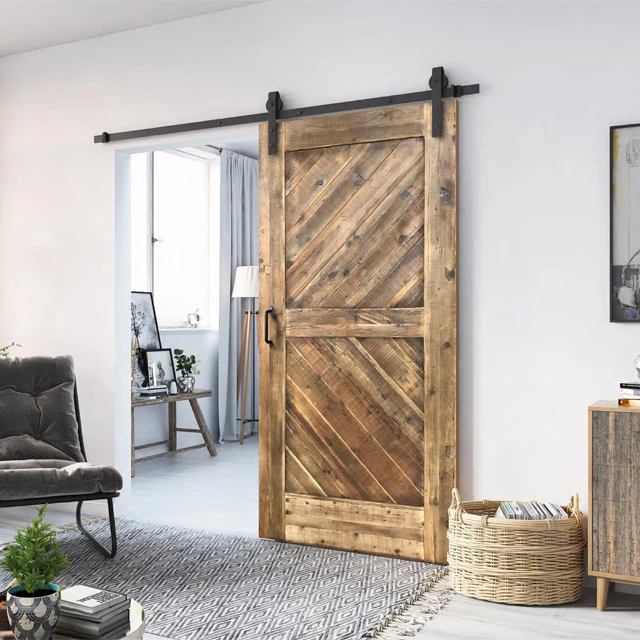
Best for: Eco-friendly projects or those seeking a unique “story” look.
Pros: Distinctive character, sustainable reuse.
Cons & Tips: Must remove nails, pests, and reinforce structure. May have hidden defects, so careful inspection is necessary.
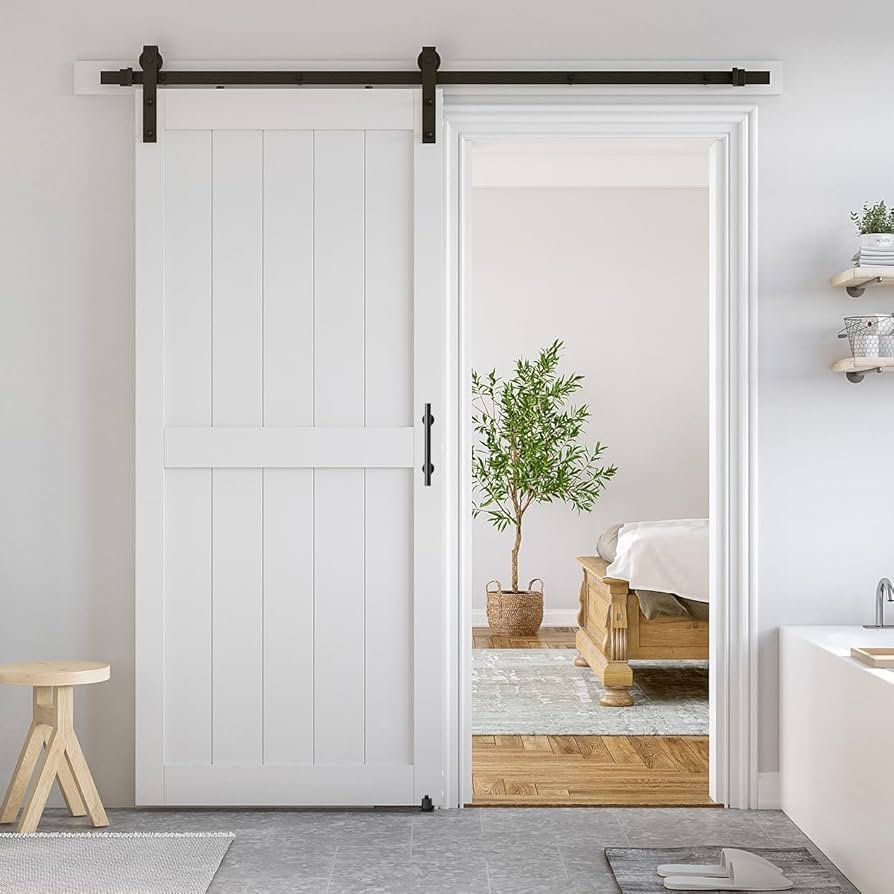
Pros: Lightweight and stable surface, ideal for oversized sliding doors or mass production.
Cons & Tips: With good materials and construction, durability can match solid wood. Choose moisture-resistant glue and exterior-grade veneer, and seal all edges properly.
Five Key Construction & Hardware Tips
Track load capacity: Sliding barn door tracks should be rated at least 20–30% higher than door weight.
Floor guide & stoppers: Install floor guides to reduce door swing; for exterior doors, add wind lock systems.
Hinges & screws: Heavy doors require long screws anchored into wall studs or structural framing.
Reinforcement: For large doors, use a solid wood frame + laminated core to prevent cracking or warping.
Expansion gaps: For exterior doors, leave gaps for wood expansion/shrinkage to avoid sticking.
Surface Finishing & Maintenance (Practical Steps)
Seal end grain: Apply epoxy or wax sealer to all end cuts (they absorb water fastest).
Primer & topcoat: Use water-based or oil-based primer for indoor doors; for outdoor, use spar urethane or marine-grade varnish.
Oil finishes: Tung oil or linseed oil give natural look but require multiple coats and regular maintenance outdoors.
Insect & mold protection: Apply insecticide or anti-mold treatment in humid or pest-heavy areas.
Inspection frequency: Check exterior doors once a year; refinish every 2–5 years depending on exposure.
Budget Guidelines (By Use Case)
Low budget: MDF / Pine / Composite veneer doors
Medium budget: Cedar / Fir / Veneered solid wood doors
High budget: Oak / Walnut / Full solid reclaimed wood custom doors
Buying & Inspection Checklist
Solid wood or engineered/veneered core? (decides thickness and stability)
Are end grains sealed with paint or coating?
What is the coating system and weather resistance rating?
Are hardware load specs and instructions included?
Has the door been kiln-dried or moisture/insect treated?
Is there warranty, repair, or refinishing service for exterior doors?
Are joints/seams sealed for rain protection?
Custom sizing and on-site installation required?
Are samples available to confirm grain and color variation?
Is packaging moisture- and impact-resistant for transport?
Frequently Asked Questions (FAQ)
Q1: What is the most reliable wood for exterior barn doors?
Cedar or Fir for balanced durability and weight. Oak if budget allows and paired with premium coating.
Q2: Can large barn doors be made from one solid slab?
Risky due to warping and cracking. Better to use a solid wood frame with laminated core or engineered wood.
Q3: Do barn doors need yearly maintenance?
Yes, inspect once a year. For exterior doors, refinish every 2–5 years depending on exposure.
Q4: How to achieve a “vintage” look?
Use reclaimed wood or distressed pine/oak. Reclaimed has authentic character but must be carefully inspected.
Q5: Any tips for track load capacity?
Always choose hardware rated 20–30% above door weight. Use professional installation to avoid bending or sagging.